95% of AI deployments show no measurable ROI. The AI value case shows where AI value leaks and how to structure AI initiatives that hold
CLV segmentation: why a blended lifetime value misleads, how to segment by channel and tier, and how it changes spend decisions. scaleon analysis.
Retention curve: the shape decides product-market fit, the starting level misleads. At 2 percent monthly churn lifetime is roughly 50 months, at 5 percent 20.
Customer lifetime value benchmarks 2026 by segment: mid-market SaaS LTV ~$43K, 4.4x SMB, and why the cross-industry median misleads. scaleon.
Fully-loaded CAC: the same acquisition reads as 5.76 to 1 fully loaded and 21.6 to 1 on media spend alone. How to fix the ratio. scaleon.
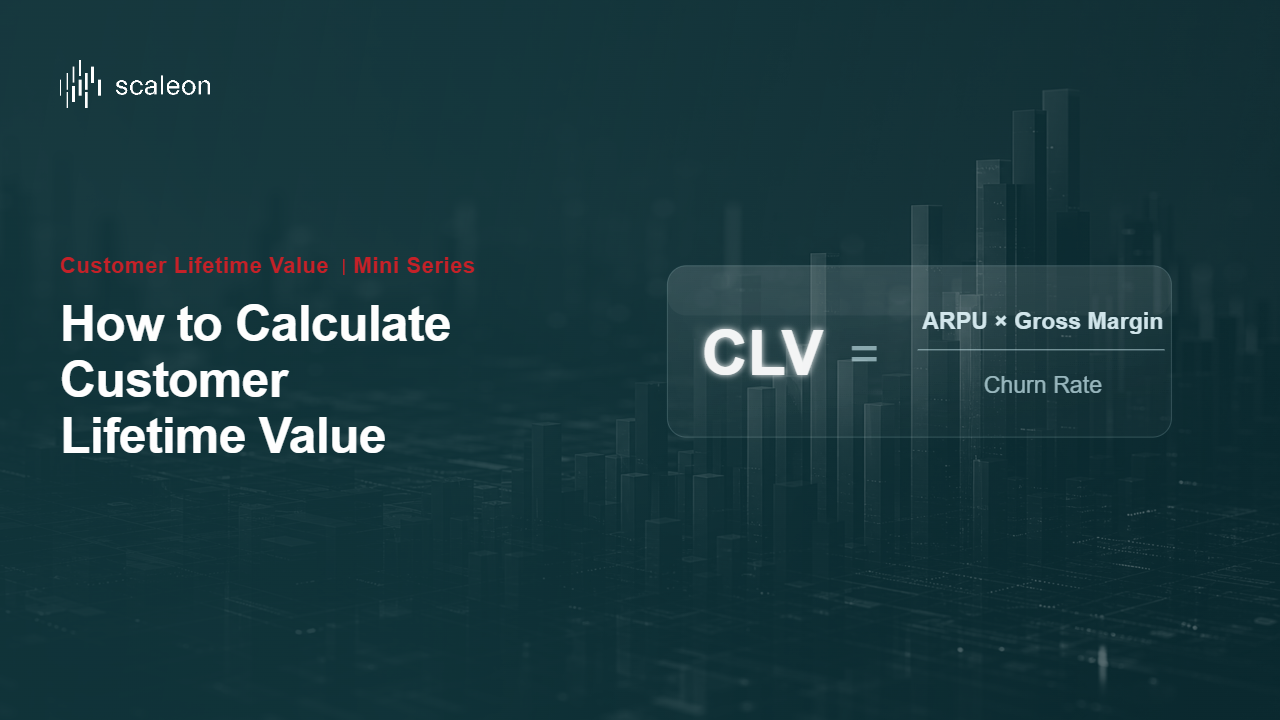
How to calculate customer lifetime value: the margin-adjusted formula, the SaaS churn-rate variant, benchmarks and the 3.4x margin trap. scaleon guide.
SaaS magic number: above 0.75 keep investing, below 0.5 fix the engine first, and why the number misleads without CAC payback. scaleon.
Gross revenue retention benchmarks 2026: median ~90%, top quartile 95%+, and why GRR exposes the churn that NRR hides. scaleon analysis.
LTV:CAC ratio benchmarks 2026: B2B SaaS median around 3.2, top quartile 4 to 6, and why a single benchmark misleads by segment. scaleon.
Cohort analysis: it tells you when customers churn, not only how many, with the formula, a worked example and what a flattening floor means. scaleon.
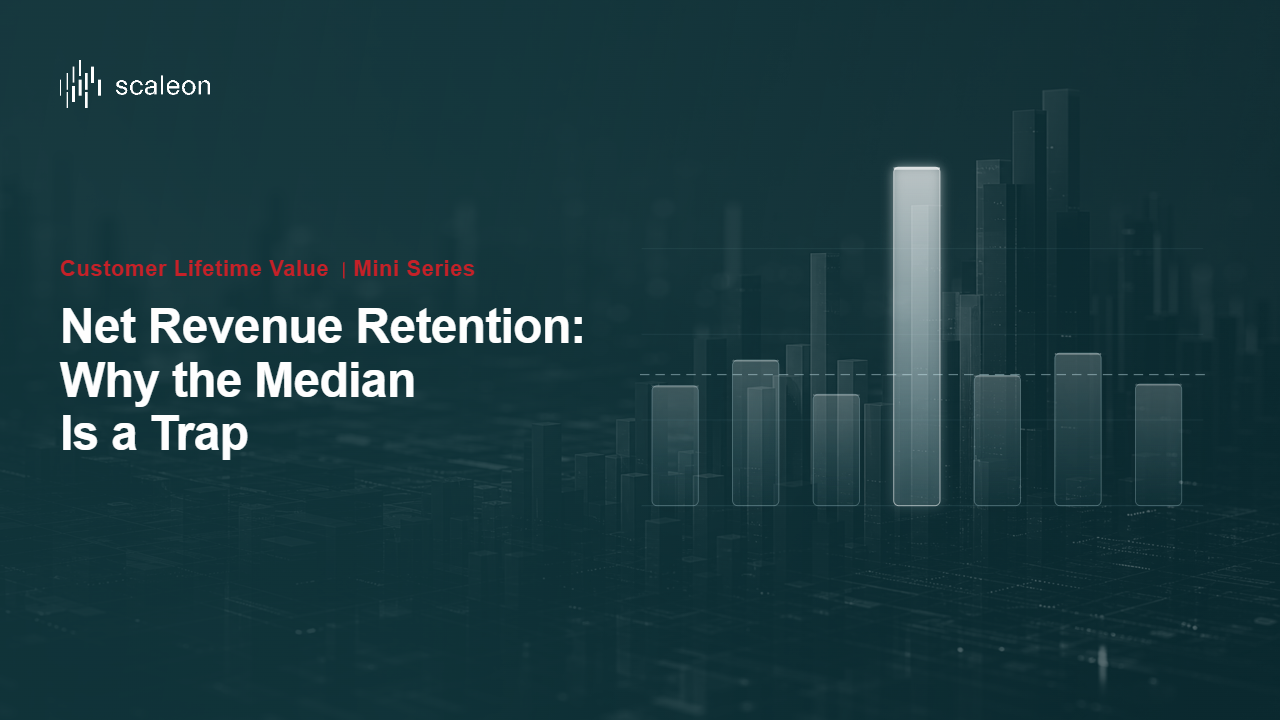
Net revenue retention benchmarks 2026: median 101-106%, top quartile above 120%, and why segmenting by ACV beats the single median. scaleon analysis.
AI resilience: how AI stress-tests digital business models, which growth mechanics hold, and how leaders assess their exposure. scaleon analysis.
Customer lifetime value: why lifting retention from 90 to 95 percent doubles CLV, and how cohort CLV explains a valuation multiple. scaleon.
sevdesk case study: from scale-up to a reported 400 million euro exit, and the CLV levers, KPI flywheel and OKR system behind it. scaleon.
Value proposition canvas: one per segment, and in B2B one per stakeholder role, because decision-maker, user and procurement measure success differently.
Developing corporate strategy: why excellent plans fail at team level and how to spot the blind spots early. A scaleon guide for executives.
Disruptive innovation: why disruptors shift the rules rather than improve them, and how companies reposition strategically. scaleon insight.
Organisational structure: how structure determines speed, clarity and accountability in strategy execution. A scaleon guide for leaders.
Portfolio management: how to allocate capital, capacity and attention to the highest-impact initiatives, not the loudest project. scaleon.
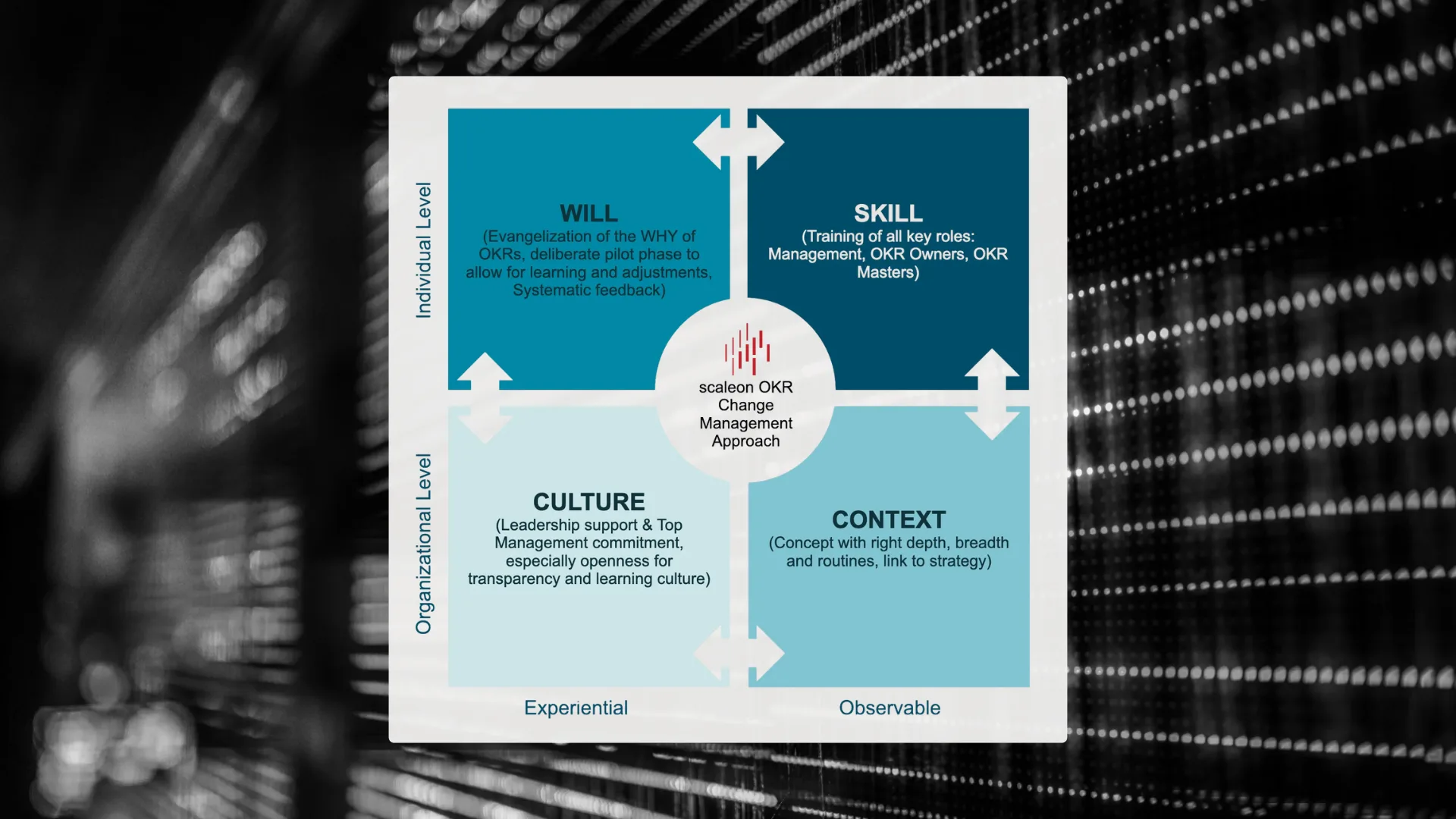
Change management: a strategic guide for decision-makers on shaping transformation in a structured, deliberate way. scaleon insight.
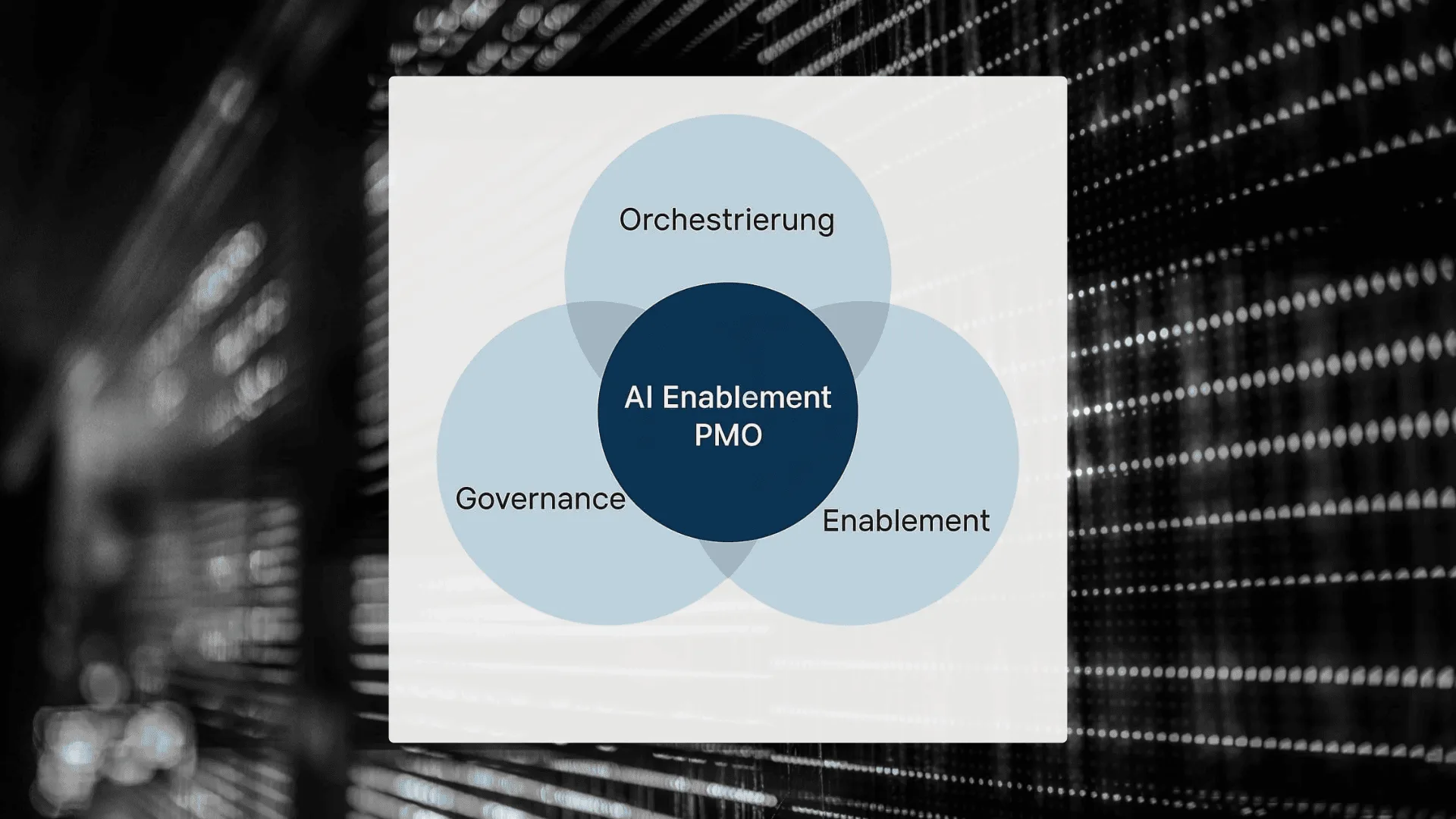
An AI Enablement PMO forms the central nervous system for the structured introduction and scaling of AI within the enterprise.
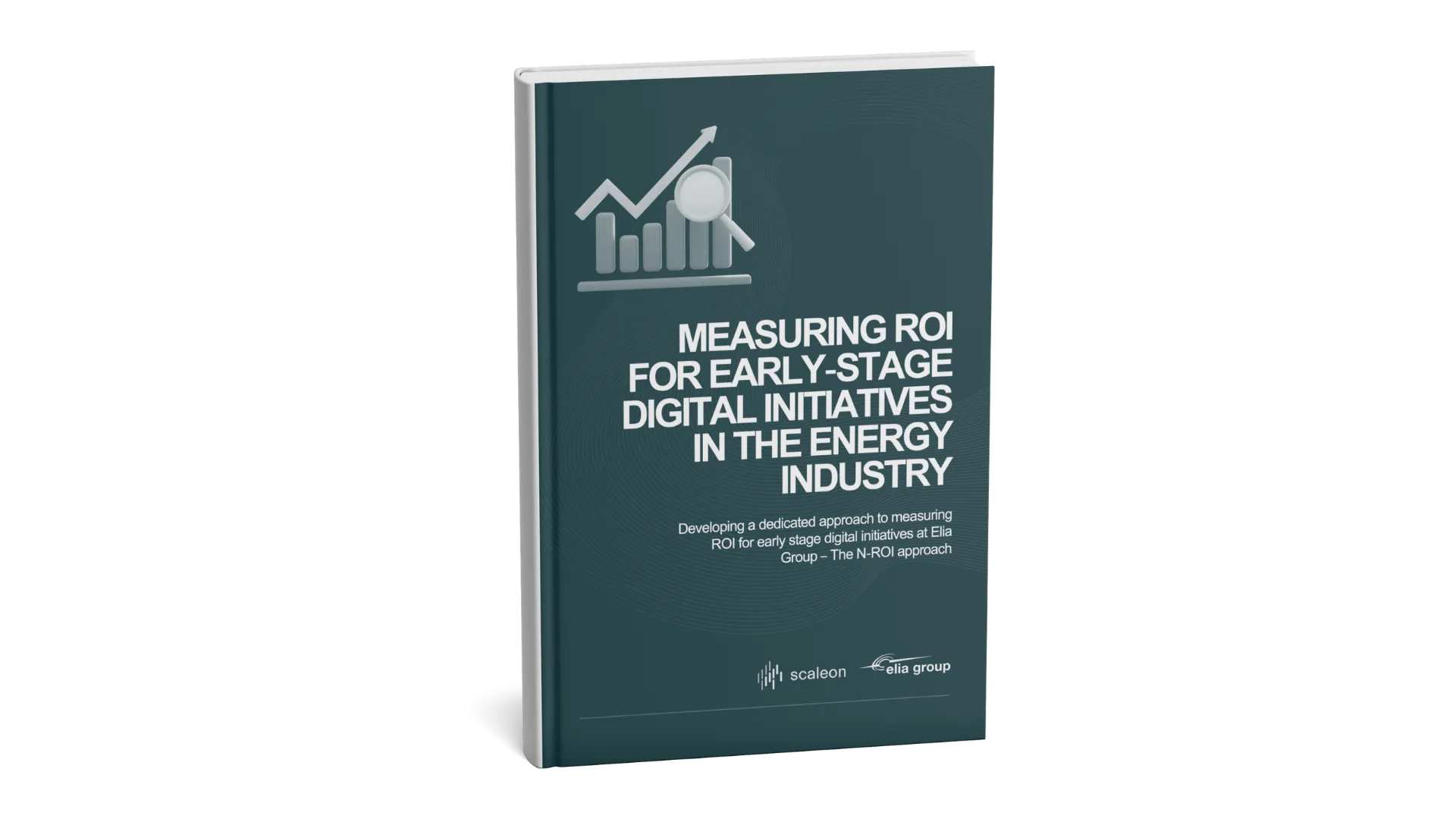
Case study: how Elia Group measured the ROI of early-stage digital initiatives transparently. Value measurement approach by scaleon.
Data strategy: a practical guide for executives on building a data strategy that drives business value, not just a technical add-on. scaleon.
Cost efficiency: how companies cut costs with agility and lift their EBIT margin without sacrificing innovation and growth. A scaleon guide.
Corporate mission statement: how vision, mission and values create clarity and how to put an authentic Leitbild into practice. scaleon guide.
Discover how successful companies implement business transformation: strategies, best practices, and valuable insights for lasting change.
Target operating model with a worked example: 4 dimensions redesigned, 47 initiatives at C-1 level, and a 24-month transition. scaleon guide.
Strategy execution: the six causes of the performance gap between strategy and results, and how to close them. A scaleon guide.
Innovation execution: success factors for measurable innovation delivery, from the scaleon workshop 'People and Strategy'. Key takeaways.
Strategy execution: the five drivers behind the strategy-performance gap and an integral approach to closing it. A scaleon primer.
Case study: introducing Quarterly Business Reviews (QBR) as a strategic steering instrument at Elia Group. Design and rollout by scaleon.
Case study: OKR introduction in Covestro's innovation division, 18 months from goal design to embedding in management culture. By scaleon.
Case study: OKR rollout as a strategic management framework with 200+ executives at a financial services company. By scaleon.
Case study: growth strategy for a fast-scaling SaaS company, from co-created growth roadmap to quantified business case. By scaleon.
Case study: strategy development for SCHUNCK Group, positioning a century-old insurance specialist for digital growth. By scaleon.
OKR Impact Report 2022: study by scaleon and Mooncamp shows almost 90% of decision-makers say OKRs meet or exceed expectations. Key findings.
scaleon receives the Top Consultant award, based on verified client ratings for consultancies that best serve their clients' needs.
scaleon Growth Briefing: how CEOs of high-growth companies keep strategic focus in turbulent times, danger and opportunity included.
Using OKRs to make strategy actionable: how Objectives and Key Results connect strategic goals to execution in volatile markets. scaleon.
Quarterly Business Review (QBR): how QBRs combined with OKRs bridge long-term strategy and operational execution. Definition and best practice.
Advantages and disadvantages of OKRs: what the framework delivers in transformation processes and how to avoid the common pitfalls. scaleon.
Innovation strategy for the Mittelstand: combining the best of two worlds for sustainable success in German mid-sized companies. scaleon paper.
OKRs (Objectives and Key Results) explained: how the framework translates strategy into measurable quarterly goals, and where it works best. scaleon primer.
Strategic KPI systems: how impact-oriented KPI frameworks measure progress toward corporate goals and steer performance. scaleon briefing.
Agile strategy development: three hypotheses on how to embed strategy work into day-to-day management and stay adaptive. scaleon insight.
OKR tools: what matters when choosing one, and why the tool should adapt to the company. Mooncamp co-founder Daniel Breucker with scaleon.
Creating value with analytics: how companies turn underused data into decisions, products and measurable business value. scaleon insight.
Elements of strategy: how to design strategic goals, strategy development and execution as one connected system. A scaleon framework.












.webp)